You have something worth sharing. The question is how to make it land.
You've spent years developing your expertise. You've accumulated knowledge, refined your ideas, developed your own approaches, and figured out things that other people are still trying to understand.
Maybe you've written a book, built a business, developed a methodology, grown an audience, or become the person people turn to when they need help with a particular challenge.
Now you want to share what you know.
Perhaps you want to teach a skill, help people solve a problem, introduce a new way of thinking, or turn your expertise into something people can experience, not just read or listen to.
But translating what you know into an effective learning experience is a different challenge.
A presentation can share information. A video can demonstrate a concept. An article can introduce an idea. But a well-designed workshop gives people the opportunity to engage with that knowledge, explore its application, practise new skills, exchange perspectives, and create something meaningful.
Your expertise is the starting point. A well-designed workshop turns it into an experience that creates value for others.
Why experts outsource workshop design
This is the part most experts don't need convincing about once they see it clearly. You know your subject better than anyone. You could build the workshop yourself. The question is whether you should, and what changes when you don't.
Because expertise and design are different crafts, and you're already busy with the first one. Knowing something deeply and designing an experience that lets other people learn it are two different skills. You've invested years in the first. The second is a design discipline: sequencing, difficulty curves, practice structures, feedback loops, group dynamics, timing. Partnering lets you bring both to the table without having to become an expert in the second, and lets you stay focused on the work only you can do.
Because the design work is real work, and it competes with your real work. Building an impactful workshop well takes days, sometimes weeks (designing activities, testing them, sequencing them, building the materials, anticipating where people will struggle). That's time most experts don't have alongside their actual practice. Delegating it doesn't lower the bar; it frees you to clear the bar while someone else does the lifting.
Because a second pair of eyes makes the session better. When you're facilitating, you're inside the experience, you can't easily see where people are lost, which activity is dragging, or which moment needs more support. A designer who has built the session with you, and who can watch it, gives you a perspective you can't replicate alone.
Because outsourcing doesn't mean giving up control, it means amplifying what you already do. This is the key point. A good designer doesn't replace your expertise; they translate it into a structure other people can learn through. You stay the source of the content, the standard, and the judgment. The workshop is still yours. It's just paired with the learning-design expertise that makes it land the way your thinking deserves.
Because the goal is impact, not effort. You didn't build your expertise so you could spend your weekends sequencing activities. You built it so people could benefit from it. Partnering on the design means the experience does justice to the knowledge, and you spend your energy where it matters most.
How to build a workshop (with an expert)
The process is collaborative, and it moves from your knowledge toward a designed experience:
Extract the expertise. Structured interviews to surface what you know—the decisions, the judgment calls, the mental models, the things you do automatically and no longer notice. This is the hardest and most valuable step.
Define the destination. What should participants be able to do by the end? In observable terms. Not "understand the framework" rather: "apply it to their own case and defend the choice." The destination shapes everything else.
Design the experience. Sequence the learning around real work, not around the structure of your knowledge. Build the activities, the difficulty curve, the practice moments, the reflection points, and the feedback loops, so the learning happens through the structure, with your expertise as the standard.
Build the materials. Facilitator guides, participant materials, activities, examples, and assessment, so the workshop can be delivered well, by you or by someone else.
Pilot, observe, and refine. Run it with a real group. Watch where people struggle, where they disengage, where they light up. Adjust. The first version is never the final version.
What it looks like when it works
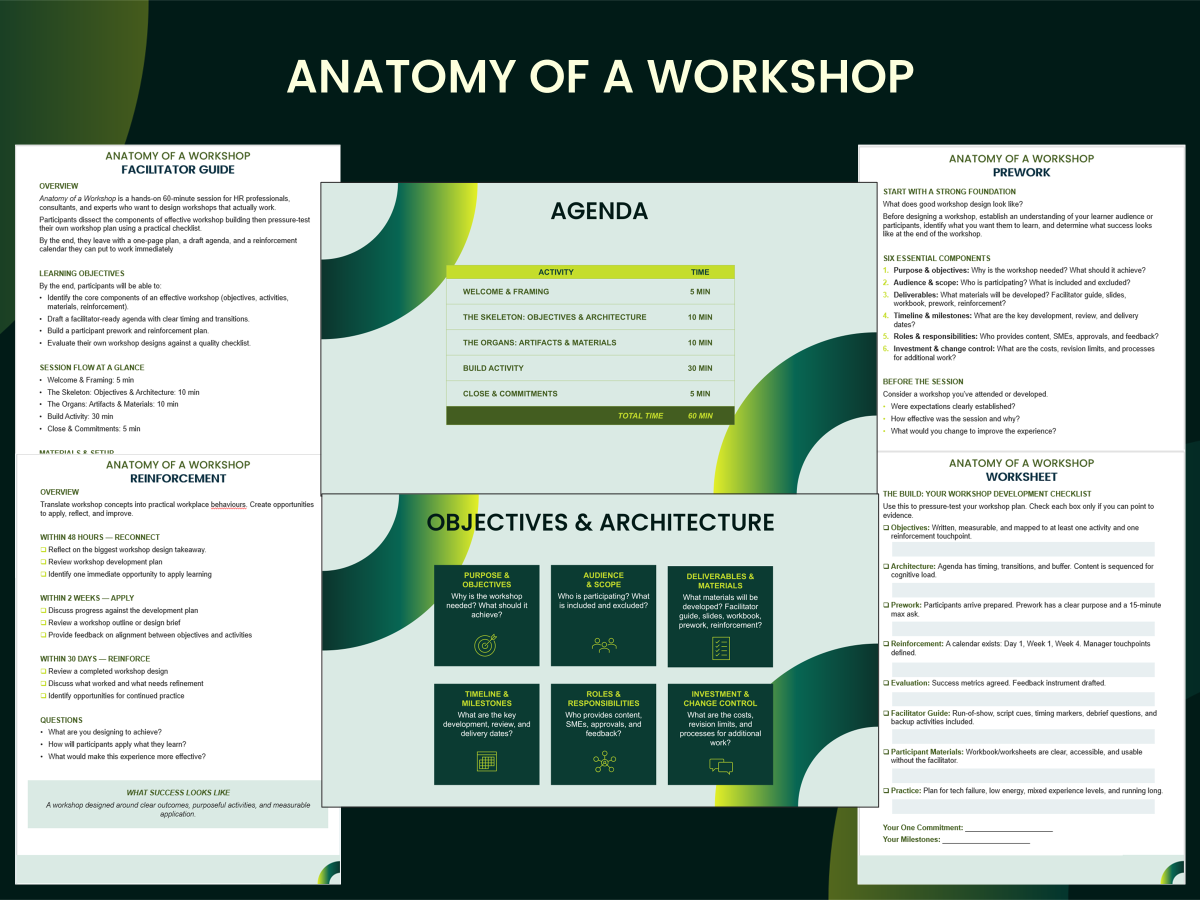
Workshop experiences get better when the experience is designed around how the expert's knowledge is translated into a structure other people could learn through.
If this is your problem
If you're an expert with something worth sharing, and you've either been asked to teach it or tried to run a workshop and felt it didn't land the way you wanted, the issue usually isn't your expertise. It's the design work, and it's the part you shouldn't have to do alone.