ENTERPRISE Academy
Build the capability. Enable the performance.
Learning and development should be designed around what an organization needs its people to achieve.
An effective learning function does more than deliver training. It identifies the capabilities required for success, develops those capabilities systematically, and helps the organization adapt as its people, priorities, and operating environment evolve.
That means moving beyond a catalogue of courses toward an integrated approach to workforce development — one that connects business strategy, role expectations, learning experiences, leadership, and performance.
My work in enterprise training spans organizational training leadership, capability analysis, competency mapping, program development, leadership readiness, and the design of scalable learning systems.
From business strategy to workforce capability
Building an effective learning strategy starts with understanding the work.
What is the organization trying to accomplish? What must people know, do, and demonstrate to make that possible? Where are the gaps? And which interventions are most likely to address them?
I approach these questions through a structured progression:
Diagnose → Define → Design → Develop → Deploy → Evaluate
-
Understand organizational priorities, operational challenges, role requirements, and existing capability gaps before determining whether training is the right intervention
-
Translate business objectives into clear competencies, behavioral expectations, and performance standards
-
Establish priorities, learning pathways, development approaches, and evaluation measures that reflect the needs of the organization and its people
-
Create the programs, resources, and experiences that help people build and apply the capabilities required for their roles
-
Support implementation through manager enablement, practice, feedback, communication, and opportunities to apply new skills in the flow of work
-
Assess whether the intervention is achieving its intended outcomes, identify opportunities for improvement, and use evidence to inform future decisions
-
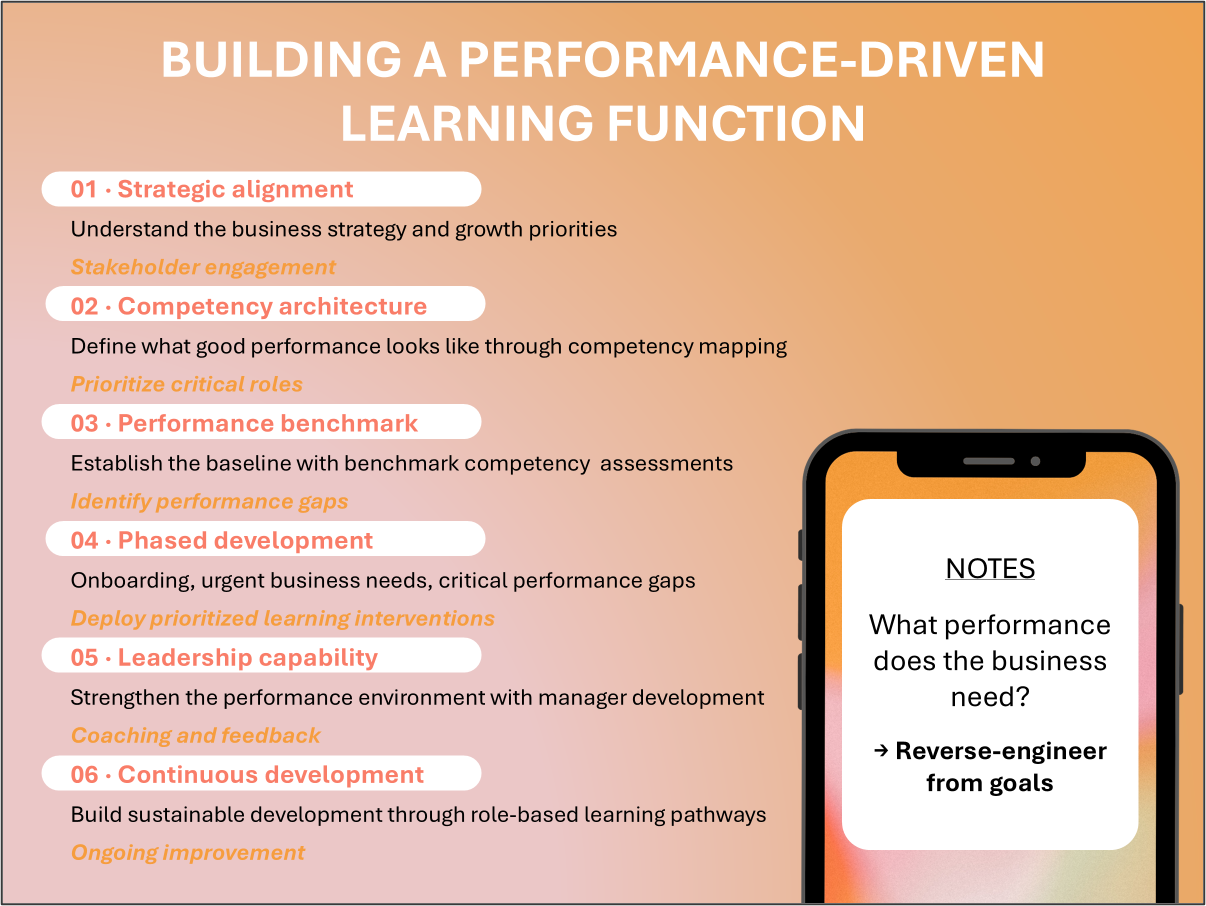
Learning Function
What it takes to build out a learning function, from identifying needs to setting priorities and standing up a cohesive training team.
-
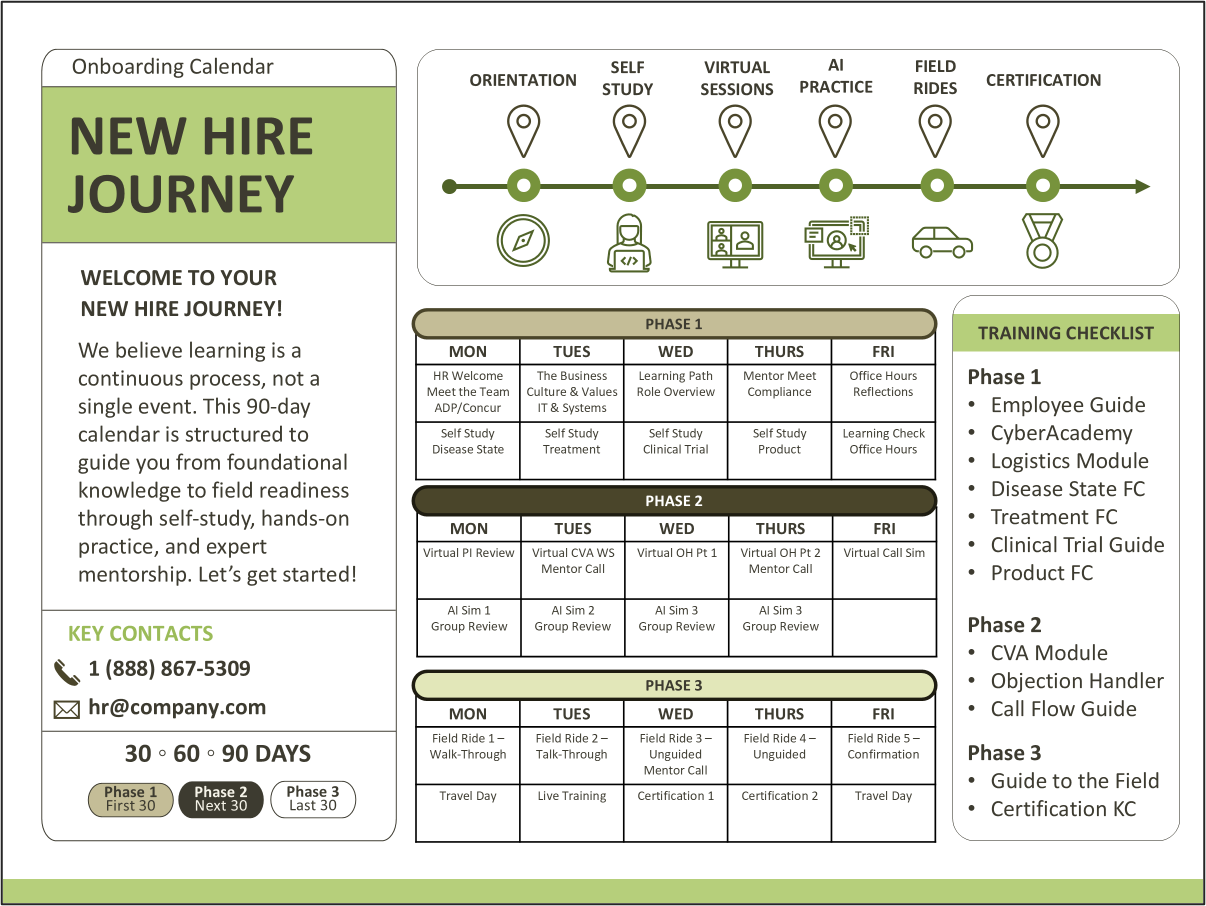
Effective Onboarding
Get new hires up-to-speed quickly; with a focus on retention, quality, and culture that sets employees and employers up for success.
-
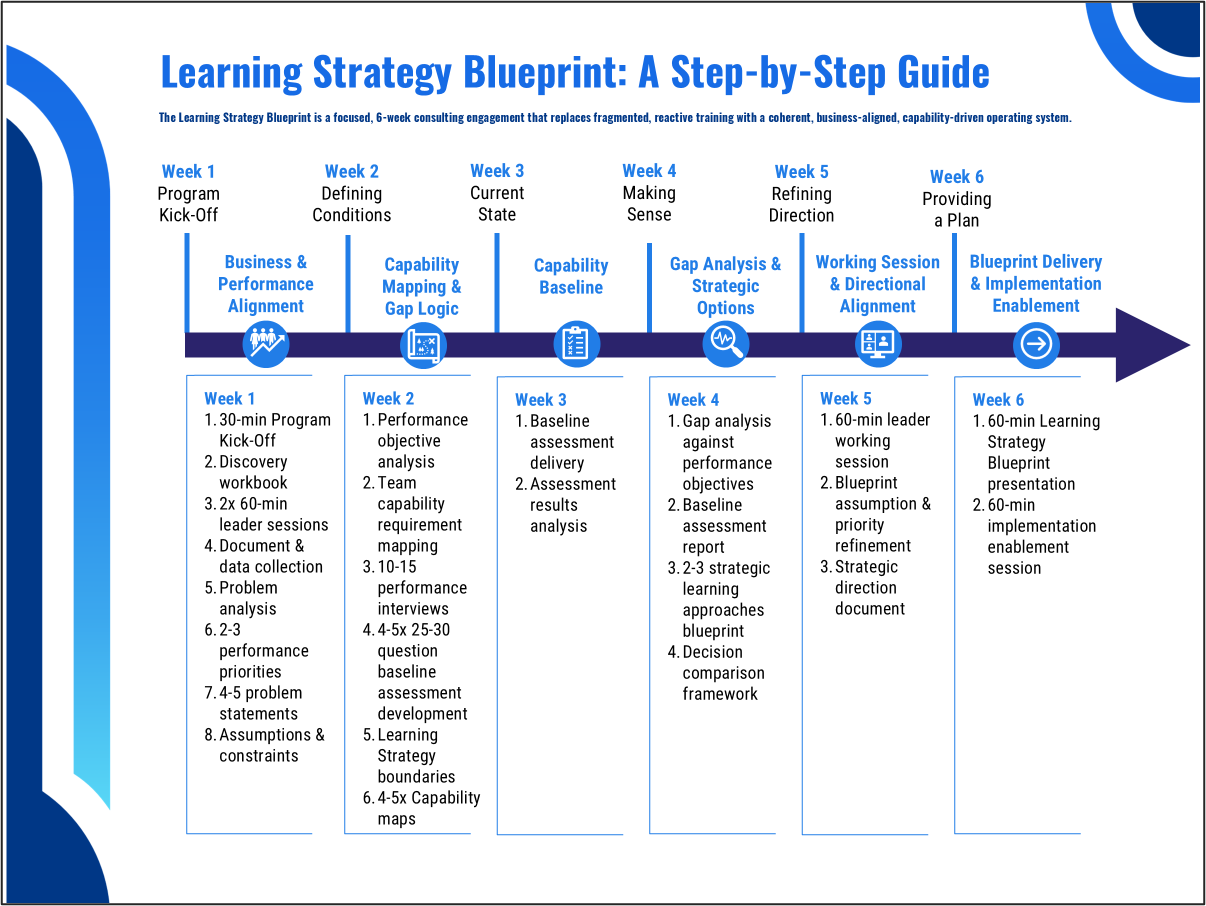
Learning Strategy
What is your blueprint for an effective learning organization in the upcoming year? Training is a tool to help your organization hit its goals.
Digital Transformation
Technology creates possibilities. People turn them into progress.
A human-centered approach
Technology adoption is ultimately about people doing things differently.
That means understanding not only what a tool can do, but also what employees need, what leaders expect, what risks must be managed, and what changes to workflows and responsibilities will make adoption sustainable.
I believe the most useful digital transformation work combines technological possibility with practical judgment, organizational context, and a clear understanding of human capability.
Digital adoption and change management
New technology introduces new expectations, workflows, and behaviors. Successful adoption requires clear communication, practical training, opportunities to practice, and support that reflects the realities of people's work.
Stakeholder alignment and project delivery
Technology projects are organizational projects. They require shared objectives, clear responsibilities, realistic plans, coordinated delivery, and ongoing attention to the needs of affected stakeholders.
AI-enabled learning and productivity
AI offers opportunities to accelerate research, content development, analysis, and routine work. The challenge is to identify where it adds value, understand its limitations, establish appropriate safeguards, and retain human judgment where it matters.
-
Understand the possibilities
Explore how LLMs work at a practical level, what they can and cannot do, how to communicate effectively with them, and how to approach their outputs critically.
-
Find the right opportunities
Explore real tasks and workflows, identify potential use cases, assess their value and risks, and determine where AI assistance makes sense.
-
Redesign how work gets done
Experiment with how AI can support productivity, collaboration, leadership, and more effective ways of working.
-
Digital Adoption
Digital transformation takes more than learning the platform, it’s a complex endeavor that relies on process change, workflow redesign, collaboration, and leadership.
-

Change Management
Leading organizational change is key to a smooth digital transformation. Digital adoption only happens when the technology works for the people who are using it.
-
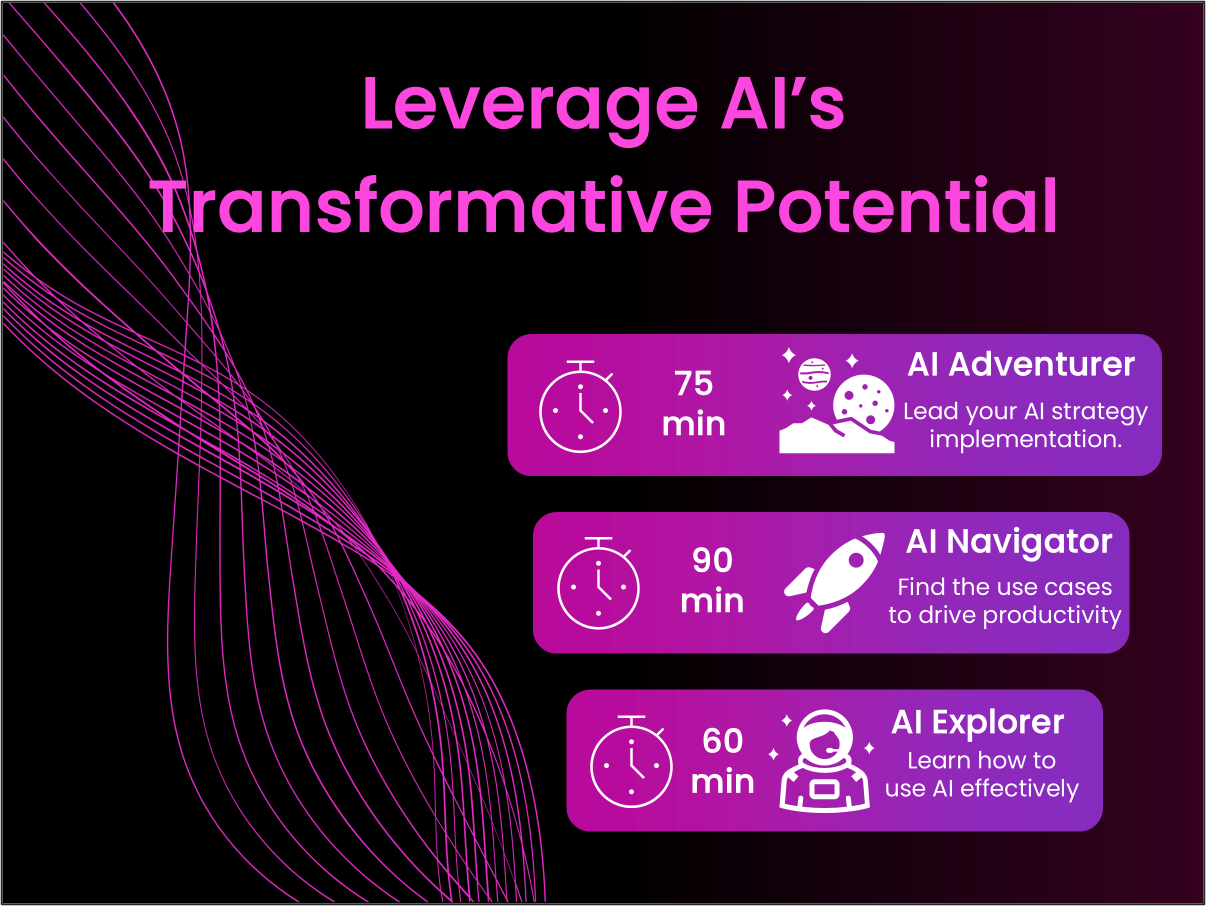
AI Integration
If you’re not seeing the productivity gains you expected from your AI strategy, have you identified the highest leverage use cases? AI is a powerful technology, when used right.
LIFE SCIENCES
Building capability in complex scientific and commercial environments.
Life sciences organizations operate in environments where scientific complexity, commercial priorities, regulatory expectations, and patient needs intersect
Preparing people to work effectively in these environments requires more than transferring information. It requires helping specialized workforces develop the knowledge, skills, judgment, and confidence needed to perform their roles.
From scientific knowledge to practical capability
A central challenge in life sciences training is translating complex information into learning that is accurate, accessible, relevant, and appropriate to the role.
The design must respect the scientific and regulatory context while helping people understand how to apply information in their work.
That means making deliberate decisions about content, learning objectives, sequencing, practice, assessment, and reinforcement.
It also means recognizing that different roles may require different learning pathways, even when they share a common foundation of knowledge.
-
Effective launch training requires a structured approach to role readiness, content sequencing, practical application, and ongoing reinforcement.
-
Commercial teams need more than product knowledge. They must be able to apply knowledge in context, communicate effectively, navigate complex interactions, and work within established processes and requirements.
-
Patient services teams operate in complex environments involving patient education, access and reimbursement processes, and interactions that require both technical knowledge and strong interpersonal skills.
-
Managers play an important role in reinforcing learning, developing employees, and translating organizational priorities into everyday practice.
-
Commercial, medical, patient services, and other functions often need to coordinate across different responsibilities, information needs, and ways of working.
-
From POAs and NFMs to launch meetings, effectively designed workshops make the most of time out of the field to driver performance that is directly tied to results.
-
Product Launch
Whether it’s your first product to market or a new indication, launch training builds your foundation for success.
-
Sales Enablement
Equipping field teams with the skills, tools, and confidence to execute strategy in front of customers.
-
Live Meetings
Thematic experiences, gamification, and cross-functional collaboration come to life with capability-building workshop design.